Posts Tagged ‘# mixer’

When I first went to a music store near my town to see if I could get a job, I naturally went to a store I shopped in a bunch of times.   I was one of the first customers to purchase a new keyboard that was starting to break all the sales records at the time.  It used FM (Frequency Modulation) to essentially create or ‘synthesize’ new sounds not possible before, ……… and …… you could play up to 16 notes AT ONE TIME!!!  You take that for granted now but that was a thrill for electronic keyboards (other than organs and all that).

So I went over and talked to the owner.  He walked us over to the keyboard I had purchased and said, “can you program this thing?”.  I told him absolutely and I can show him now how to create cool new sounds.  He said, that was OK and I was hired.  That started the sales portion of my journey.  This song got the name and the main groove from the keyboard sound in that Yamaha DX7 synthesizer.

If you played individual notes in the right tempo, the thumping sound would build just right and you got this effect like a helicopter at a distance.  I did write lyrics for this song, but I always hear it as an instrumental. For the early instrumentals, I was recording on the first computer for consumer electronics that had a built in MIDI port, the Atari and I had the 1040 ST.  Again, that means nothing today, but this was space-age technology and had a lot of musical applications.  I still have it (two, actually and two monitors) and it still works to this day.  I can fire up the Atari and still play all these MIDI pieces as I did when they were written.

The drums are all programmed.  In fact, everything is.  All the sounds are triggered from the Yamaha DX7 and recorded via MIDI.  Each time you hit play’, you are regenerating all the sounds to make this song. See the MIDI series for MIDIMike’s intro to MIDI by clicking here.


MIDIMike

Speaking about lyrics that never become songs, etc., sometimes I write and record a demo or rough track of a song and it just never seems to go anywhere.    Some of them do get resurrected, many don’t.  For some it may be as simple as a tempo change or a different arrangement.  Other times for me it is mysterious.  In honor of Saint Patrick’s Day, I would like to post lyrics to a song in the making.  As this platform gives us access to followers around the globe, I do not want to leave anyone out, so please take this as intended.  If I don’t mention your country, other people’s songs will!

Then in a later post I can bring in the recorded demo tracks.   I like the lyrics for the most part and I love the idea behind the song, but it is not there yet.  Maybe after a pint or two of Guinness and some suggestions from you I can finish this song.  And of course, that could be a topic in and of itself.  We hear phrases like “final mix”.  Some people say there is no such thing.  Others say you just have to stop at some point and let it go.   Much of this may depend on your final goal.  Are you a singer/songwriter trying to get a break and some air-time?  Are you shopping for places your band can perform your unique style?   Do you want to have a clean demo to send to your favorite artist?  Is this a sound-track for video/YouTube?  Do you make sound effects for games?

We can always say make it as good as possible but that is very subjective.  Hire 50 sound engineers and you will get 45 different mixes (there are always people that look over your shoulder!)  Tip for today;  it takes a really long time to fix it in the mix even if you know what you are doing.  It is much easier and preferred to get the great sound first, and then record it properly (using gain staging and other procedures mentioned earlier).  When you record a great sound it will sound great.  As a sound guy for a local band I would get compliments on the sound (House from the audience but almost always monitors from the band).  I thank them and tell them the band sounds great, I just let everyone hear them.

“A Part of Me”                                                                   © 08-2000  MSK

American Indians gave me my soul,

A spiritual guide for all living things.

Each man’s fate is his to control

Peace with Nature, the warrior sings.

A Part of Me belongs to all of Them

From the Germans strength was my first lesson.

Trial and precision as you master these.

Pride that’s passed down from son to son.

Built in each hand crafted Masterpiece.

Oriental neighbors have shown me the light

Truth, Balance, Eternal harmony.

The beauty of patience and delight

Traditions deep within history.

A Part of Me belongs to all of them.

I’m proud to be an American.

Sisters and brothers from every shore,

That’s what makes us Americans.

Part of Me belongs to all of Them

From the Irish I inherit my pride

I stand my ground and I will speak my mind.

I will honor the lands and the tide,

And I’ll never leave a neighbor behind.

My English side embraced nobility.

Dry humor in the face of foes

Hardy enough to capture the seas.

Portraits legends and heroes.

African Americans forced to become

A torn people of two nations.

Tribal tales and melodic rhythm

Passed onto the next generation.

The French helped me understand

Style and grace can be nurtured like wine.

To believe there is no better place

Life shared with friends, bread and wine.

A Part of Me belongs to all of them.

I’m proud to be an American.

Sisters and brothers from every shore,

That’s what makes us Americans.

Part of Me belongs to all of Them

Year after year

They want to raise their children here.

Because sweat blood and tears

Can amount to something here.

There’s a lot of people in my life

A part of Me belongs to all of Them.

Your song may be different and that’s OK.

Sing it with your fellow American.

This is a good time to walk around a little if you can. If you have a helper that can baby sit the board for a while, slowly walk around the venue.  Listen to the various instruments as you walk to different sections and notice how each area sounds as you pass in and out of range of the main speaker clusters. Listen again for areas that ‘drop out’, especially in the main audience areas.  Talk to the host.  Make adjustments and respond to their suggestions.  Interact with the audience if you are good at that sort of thing.

Bring all that listening back to the sound board.

What adjustments can you make to improve the house mix?  Is a player sounding great when you are right in front of the stage but fades quickly if you are back further or at the bar?  Does the kick drum or one of the vocalists sound muddy and hard to hear clearly.  Listen to each instrument again.  Use the headphones and solo tracks do they sound muddy in the headphones too?  If so, you might need to change the EQ settings or other audio processors, change microphone location, REPLACE the microphone cable!, put rings on the drum heads to stop heads from long ugly tones, hey, there is a lot of stuff that goes into making the band or performance sound good.

It can go wrong.  I have gone up to drummers during sound check to ask them if they have any objections if I tune the drum heads for them before the gig.  Far too many drummers don’t know how to do this and far too many more don’t know that you even can.  If the kit is out of tune and generates all sorts of random harmonics and overtones, there is no way to get it to sound ‘awesome’.  It can sound loud and it can sound full, but it will never sound good.

I have probably upset a few performers as well by asking that they tune their instruments before we start playing.  One of the benefits of also being a musician in a number of bands is I can tell when something is out of tune.  I don’t think I can get drunk enough that playing out of tune is a good thing, but there obviously are a few out there.  If they cannot tell the difference that is worse than being too drunk, but we all sound and play better when everyone is in tune.  Some bass players can’t tell any more so you have to politely step in once in a while.

In a large club in front of a packed audience, the lead vocalist roared into the microphone, ” I ain’t got shit in the monitors, sound guy,  I got nuthin’ up hear at all…”.

I responded with a simple but effective test that I could do from way out in the audience.  I reached up to the main faders and yanked them down completely before he got to the “…… sound guy,  I got nuthin’ up hear at all…” part.

So he ended up with the band now reduced to stage volume.  As he was saying …’sound guy …’  He was booming through the on stage monitors at an amazing decibel level.  He apologized to me and the audience when I turned the mains back on and we rocked out the rest of the night.  The house was loud enough that he could hear them more than the mains and he was not used to that feeling.  That the sound guy would not have the vocals loud enough in the main mix and he would need to hear the monitors really loud on stage.  He ended up really happy with the mix and did not have to scream all night over the band stage volume.  Keeping things solid can include a number of unexpected challenges that are better met head-on, but these business relationships should also be kept friendly and cooperative.

Have spare cables for everything, even if the sound system does not use it.  Power cables for devices and amps.  Adapters for audio cables.  Tape, markers and paper.  I bring guitar cables and a few spare mic cables everywhere.  Batteries.  Small hand tools.  Power outlet tester.  Flashlights.   Drum head tuning keys.  Zip ties, the list could go on but session after session, someone will need those things for the show to go on and you will be the champion pro.  You gain cooperation and trust for the next gig.  Win win.

We all know the saying about weak links.  When you have so many components – each connected with cables and software and processors, it can take a while to troubleshoot the system when you have a failure.  Yes failure.  If you are the sound guy or gal and things don’t work or it sounds bad, YOU are the failure!  There are basic steps you can take and I can describe them in a generic way, but that type of advice will not apply to every system out there.  No two clubs or sound companies have the same sound equipment.  The best advice is to keep the number of links in any chain as low as possible.  The more links, the more of them that could be or eventually become weak.  It is not always practical to have a spare of every component, but finding local music and sound stores open in your area is getting tougher.  If taken care of properly though, most professional PA equipment available today will last a long time.  More on “Maintenance and Tips” in a future SLR series.

If we look at the typical piano keyboard the visual impact is beneficial to demonstrate this big picture ….

You will eventually see the repeating pattern of white keys and black keys.  The pattern repeats over and over.  The piano is ideal because even though it is squeezed to save space, the keys and notes are linear;  to the left the notes or tones produced get lower, and to the right the notes get higher.  As we look to the center we can locate what is called ‘middle C’.   We can use this note as a good reference on the piano because it makes the key of C Major easy to see and play.  Other instruments will make it easier to see and play other keys.  This has to be detailed later, but for now, if you start playing the middle C and then play each sequential white note, you are playing in C Major.

A simple count however shows there are 12 notes between each ‘repeat’ of the cycle or each octave visually displayed on the keyboard.  That’s it.   12 notes and then it repeats.  Now that doesn’t sound too mysterious, does it?  The mystery comes in on knowing what notes to avoid.  If you eliminate the notes that are not within the scale or key you are working in, it becomes like the key of C Major on a piano; you will easily see and play the right notes.

    1       2      3      4      5      6        7      8      9      10      11      12
     C C#    Db      D D#   Eb      E      F   F#   Gb      G G#   Ab      A A#   Bb       B

In the key of C Major, it would be a safe guess based on the above, to play white notes.  It the simple chart above you can also see the numbers greyed that represents the black keys.  In this example, the black keys are not within the C Major scale.  For other scales and variations of scales, they WILL!

Generally speaking, if we are playing the C Major scale, playing black keys will not always fit in with the other notes being played.  White keys have a much better chance of ‘fitting in’ with other notes being played.

Which reminds me of a joke about musicians……..

What is the difference between a jazz band and a rock band?

The jazz band plays thousands of chords to three or four people and the rock band plays three or four cords to thousands of people!

In Euphoria at this time, I am the keyboard player and I do some back-up vocals and percussion.  

I get to set up in the recording control room and listen to the studio speakers for monitors. I can look through the glass and see the other players; drums in isolation booth, guitar amp and bass rig in separate areas with go-bo’s and sound partitions avoiding spill-over.  Vocalist was in place in booth, but we are doing scratch vocals now for the most part to keep the musicians on track.  The studio is using reel-to-reels back then, but they are great machines and the board is more than I had gotten my hands on at the time.  To let you know I was the performer here.  I was not the engineer and I kept my mouth shut.  [OK, maybe that was a hidden lesson if we think about it!] 

To set up the story a little, when Euphoria plays live and the guitar player breaks a string (in our band this happens all the time and even our BASS GUITAR player breaks strings regularly!) we have to stop the song.  The guitar players will grab another guitar or change if needed…… 

And no matter where we were when we had to stop playing the song, we started from the same place and continued the song to the end.  So when we came into the studio, we knew what songs we wanted to record and in what order, but we also knew which part of each song should be on the demo.   We did not want to record a bunch of full songs all the way through.  When we were ready to record, the vocalist would call out what song and Verse 1 and 2….  Chorus 2…….,  Verse 3, Solo – then Verse…..  Whatever it was that we wanted to record.  We did not play all the way through and then have the tape ‘cut’ to those areas;  it is all we recorded.  We caught the sound guy off guard.  He must have initially thought we were going to go way over time.  As it happened, we did all the cover tune sections we wanted and had time over to play with an original tune the guitar player was working on. 

Oh, yeah, there is still a lesson for the recording engineer in all this.  He told me during a number of conversations (I asked about stuff after all, but I tried not to back-seat-drive the recordings) that he had struggled for two years on getting the drum booth tight.  He had changed the drum heads multiple times.  He bought more and more expensive microphones.  He used the latest gates and processing gear.  He moved everything up, down and sideways.  He changed soundproofing a million times.   

Here is what he said to me that day, “All this time I thought I didn’t have the right drum booth and gear.  It wasn’t until tonight that I figured out that I just did not have the right drummer!”.   

Unfortunately the other band members would not let me tell the drummer that for a long time in fear his head would get really big and explode!  

Journey – Separate Ways

Black Crowes – Hard to Handle

Yes – Long Distance

Yes – Changes

The Who – Can You See the Real Me?

Shooting Star – Last Chance

Queensryche – Jet City Woman

This is another term that is often misunderstood and the results can be unpleasant for the audience and performers as well.  This does not prevent the error from happening over and over.  It doesn’t have to happen to you.  At first glance the term is quite simple.  In its simplest form it probably means “turn things louder”.  And that may be the most widely used interpretation.  But the phrase is not, ‘Sound Forcement‘…… it is reinforcement.  If something is loud enough on stage, ……… wait for it ………. It DOES NOT need sound reinforcement.  In a small room, the trumpet probably doesn’t need much – if any – volume reinforcement.  (certainly not in the stage monitors and little if any in the house mix)  The guitar player with 10 Marshall stacks in a thirty seat room probably does not need sound reinforcement.   Well then, what does?

Simply enough, anything that is not run directly through an instrument amplifier on stage.  This could be the sounds from the keyboards or tone devices, vocalists, special effects FX (usually effects are used in the house mix but can also be sent to the monitor sends) and back ground or other media tracks including the ‘tape’ input for your stereo music player used in our earlier post. 

We will do better if we use this definition for both sound systems we have pulled together for this event.  On stage, do not add anything to the monitor mix that is already loud on stage.  Again there are exceptions and many performers will argue this point, but I try to keep the monitor sends clear of anything I do not need to reinforce.  If it is a big stage and members are far apart – absolutely add a little of an instrument to the other monitor mix.  Everyone needs to hear the other performers.  Just do not add to all monitor mixes if you use multi-monitor sends.  Smaller stages there is little advantage in sending amplified instruments or drum set channels to the monitor mix.

Now, look at the balance from the house point of view. Can you hear the reverb on the snare drum and mounted toms clearly?  Is one vocalist drowning out the others?  Is that trumpet (or cymbal crash or tambourine or Kick drum) not in the mix during the solo?  Can the keyboard player hear the monitors or instrument amp really good but no one in the audience can hear them?  Can solo performances be heard clearly above the mix?

Set and forget.  There are a number of input sources you will be able to set once and leave alone.  The drums should be set up properly during sound check and should not need fader, pan, EQ or volume adjustments during the typical event performance.  So the easy ones are drum and percussion kits along with some keyboards and other tone generators.  Brass, string or choir sections can also be set.  Most of these groups can be balanced during sound check and you will never have to mess with them for the rest of the performance.  That allows you to focus on the variations of vocal performers, solo instruments and ‘guest’ players.  Make sure if you turn the instrument louder during a solo or energy section that you turn it back down when the section is over. Otherwise it is a race to the top and others will need to turn up to hear themselves comfortably.  Then the rest of the group has to do the same to keep up with the neighbors on stage.  It can get ugly at the top.

In small clubs or rooms, there is very little need for large PA systems and huge speakers.  In many situations you will do fine to let the stage volume fill most of the room.  Sometimes all I have to add is the keyboards and vocals, with the effects thrown in on top.  I might bring up a guitar or other solo instrument in the mix, when the rest of the time that instrument fader is off completely in the house and monitor mix.  It simply does not need sound reinforcement there.

In some gigs, a player can be loud enough on stage that you cannot increase over-all volume using the house system.  They are so loud that the PA for a small club will have little effect.  I have been known to take players completely out of the house mix.

I use simple guidelines and want to ensure that any and all performers will be heard in the house.  This includes each percussion instrument to various keyboard textures and sounds.  I keep all levels in balance so one instrument or group of instruments does not dominate the performance or mix.  I make sure band members know they do not have to play loud on stage.  All they have to do is play good and I will make it sound great in the house. You play; let me crank it up!

Performing with other musicians requires a deeper channel of communication than normal language. When creating in this environment, every nuance has a meaning.  Every motif can create musical ripples.  Sometimes, two thoughts are better than one.  Co-writing can take a piece further than you would have thought possible on your own.  Try it.  You might like what comes out of it.  Over the years I have worked with a group of songwriters.  Each writer diving in to show off the latest and greatest.  While in one of those small traveling bands from hotel to hotel, I was playing in Corpus Christie TX.  We played a lot of different music for three people, and one of us did not play any instruments.  We wanted to come up with something with a bit more country flavor, and the lead guitarist was working on some soft ballad type chords during practice.  I told him I had written some lyrics that might fit.  I had finally given myself the title of songwriter as you know, so a while back I challenged myself to write a country song.  I had something specific in mind.

I write a lot of songs.  I write a lot of lyrics that never become songs (not yet anyway).  I write a lot of poems that may never become lyrics.  I write a number of songs and I might not even have a recording of it, even though I love to archive and preserve original performances.  Some songs I write for others and do not have a real interest in recording myself.  Maybe because I already have a good idea of what the song is supposed to sound like when a real performer/band records it.  I am not putting myself down here.  I simply do not have the talent or resources of famous stars.  You might laugh, but when I was writing the lyrics below, I wrote them as a duet for some famous country music stars at the time;  Kenny Rodgers and Dolly Parton!

I have only one recording of this song and I will share it with you, Kenny and Dolly you too if you’re listening!  I am singing the male part on this recording.  Not sure if this was ready before we moved on from Corpus Christie to another hotel, but it fell together quickly with the ballad chords at practice, so we performed it live to the more country leaning southern audience.  We were surprised that it went over so well and people in the hotel/audience that were regulars, were singing the words after a few nights in town.  So, I will probably never record this song.  It has always been a distant dream to one day hear others recording this as their own.    I have already heard in my mind what it sounds like with them performing, but this live two-track recording is not too bad for a working representation.

You have seen a million and one videos of live bands or performers.  The stage set-up is fairly common for most band configurations.  We usually do it like they do because it almost always works.  If you have a typical band or act, use the standard stage set up to start with and correct if you need to make adjustments.  Some band or act members will play instruments, some will sing or do both, some will jump off stage and some will be too drunk to walk on their own.  Keep your eyes open and stay close to the volume fader!

I usually turn the volume down on the main amp and the monitor amps before the band starts arriving on stage.  Always make sure to turn the main and monitor volume faders down completely before connecting OR disconnecting  any cables to the mixer or snake.  The snake should already be connected in numerical order before the band is there as it is needed to set up the monitor signals we tested in the last LSR series. 

I know a lot of sound guys that do not do the following suggestion or piece of advice I will give you.  But if you are just starting to do LSR or have been doing for a while and sound checks are not fun and people get angry (with you sound gal and band/act), fire up the sound system this way.

Connect all cables to the snake in an orderly system.  You can use your own rules as needed by the performers or the event to number them, but try to use a system that is easy to remember and easy to repeat,  I will have some suggestions and tips coming in future posts.

Usually, performers will show up at different times.  I try to take advantage of that and direct them to the proper position on stage.  Connect their instruments and microphones to the snake.   Connections can be made simple too as you will see in other topics.  Test their signals from the sound board and make sure to get good working levels (NOT practice levels!)  (More on ‘Gain Staging’ in future posts)  Listen through headphones if necessary to get a good tone and strong signal.  Add player to monitor send(s) as needed.  Now you can talk to performers and have them help you get their levels set.  As each player arrives, the other players will encourage same process;  get into position, plug in instruments, check levels, if applicable add signal to the monitor mix(s) as needed. 

I do all this without turning the Mains volume faders up at all.  For the most part, the audience (and the host that represents the people that paid you and your group for the event!) will not hear much at all, especially as the venue or room for the vent gets larger.  The sound check stage volume should not be enough to bother most people in a club or hall unless they are very close to the front of stage.  After testing each performer’s input signals and getting a good monitor mix, it is time to have the performers do a song or section of the performance that has all members if possible playing.  Do a song or two without the mains turned on to get the feeling of the sound on stage.  Do not rely on the house speakers for this part.  Check with your headphones.  Solo ‘channels‘.  Adjust the monitor mix for each player as needed……..  This is an art of its own and has a bit of science and magic thrown in.

At that point I am ready.  I have good signals, I have tested the Mains and they work as designed and sound good.  The monitor levels are right and during the sound check the performers and players settled in and all players could hear themselves and other performers in proper balance.  If you are lucky, it is time for you and the band to take a break and get ready for the performance and the energetic crowds.  If desired or requested, you can play audio or sound tracks during break through the house system (never the monitors unless specific need) at a moderate level to set the mood.

Now that you have the gear you need (or more likely what you could get your hands on), we can assemble it as we carry the gear in.  Do not carry this heavy and bulky stuff anymore than you have to – bring it in and put it where it goes.  So, as mentioned in earlier in this series, scope out the venue so you have a plan of attack.  Even if it is 15 minutes after you arrive, take a quick look around…. Where is the best place for the sound board?  How is the best way to run the long snake cable?  Where are the electrical outlets… can they handle our system power requirements?  Are there any doors or emergency exits you need to be aware of?  Where will the audience be?  Where should you set up the drums, keyboards and monitors?  Sometimes you will not have any choice at all and the host of the event will have their own layout.  Roll with it.

I try to get the main system and all cables run before the band gets there.  I have monitors in-place on stage based on my understanding of the performance/band/event.  I connect the mixer and all house cables. 

Then I test entire system;

Turn on mixer and plug in talk-back mic or any mic into a channel on the mixing board.  Make sure levels work.

Send Talk-Back signal to each of the affect inputs to make sure signal is going to proper effect box or internal effect, and make sure it returns to the input or ‘bus group‘ you will use for that effect.  Make sure headphones and ‘solo’ function works properly.  Yes………..   Bring your own headphones and (ear plugs too!) make sure they are good quality closed type.

Turn on stage monitor amplifiers.  Turn up each monitor send (can be one to four monitor sends from the board) and use Talk-Back mic to send signal to each monitor.  Turn all others off and listen to one at a time to make sure you are controlling the right monitor.  Do not overlook this step.  The on-stage mix is critical, and the mixer – sound engineer is not able to hear the speakers on stage once the mains or house speakers are kicking in.

Make sure all mixer sends to the main amps are turned off all the way before turning on the main amplifiers.  This can save you and the event host a lot of headaches.  Plug in an audio player to the mixing board ‘tape’ or other stereo input and set the levels.  (**)  Slowly turn up the mains with the audio source playing and the signal strength can be seen on the input indicator.  Give it some gas but no need to rattle the windows now.  Keep at a good level and make sure each speaker (or cluster/group) cabinet is connected properly and working.  Walk around the club/venue and listen to your test music.  Hopefully something you know very well.  Try to find areas where the sound collects in corners (sometimes the bass can build up in an area and become very boomy while the rest of the area you cannot hear the bass at all….) or where the sound ‘drops out’ and gets softer or thin sounding.  (this can be from improper phasing due to room acoustics or other audio timing issues.  Try slowly turning main speakers at different angles toward the audience to correct).  Make sure it sounds good everywhere, or at least know that particular areas will sound different and in a number of venues it will sound totally different as you walk around. 

It is not unusual for the sound board to be placed in the worst acoustic piece of real-estate in the club!  Make sure it sounds good standing in the audience, even if it does not sound so great where you are mixing the board.

Now, we are ready to bring in the band or performers.

20150215_173005Not only do we have 16 channels of MIDI available (per cable…. Other cables can carry 16 more channels as you expand) but we also have 128 steps or individual notes that can be assigned to each channel or voice.  (again, if your device counts zero as a number, you will have 0 – 127)  This is particularly important for triggers and non-sound system controllers.  For example, if you are playing a MIDI keyboard, sax or reed controller as Master, you are not normally trying to redirect a C# to an F, though there are reasons for doing this in some special circumstances.  You just want to perform your song on the Master Controller and have your performance represented as you played it – for better or worse!

However, for drum kits and other triggers it is crucial to set up in advance the sounds that will be played when a specific trigger is hit.  Usually you can change this in the Master Controller itself.  Pick the channel and the specific pad/key you are editing and go to the Menu Options page.   Select MIDI Note Number options.  There are too many ways today’s gear will get you there or what they call it so it is hard to make this specific to all, but that is what the owner manuals are for!  As your Master Controller is connected properly to the receiving tone generator or receiving device, hit the pad or key or button you are trying to edit.  You should be able to see the note number the current pad is assigned to.  Continue to raise or lower this number one digit at a time or enter the KNOWN MIDI Note Number and then Enter.  Once you are triggering the correct sound, sampler or other gear, go to the next pad in a similar mode until all assigned pads correctly trigger the intended receiver.  Save everything and pat yourself on the back!  Keep in mind you can do this over and over depending on project, recording or performance needs.  Most devices will allow you to store and recall a large number of performance templates or basic ‘kits’.  Take advantage of this tool!   Once you set them up, you can use them forever and make your set up time amazingly quick. 

As a keyboard player in a progressive rock band, I used specific keys or notes on my keyboard(s) that were outside the range of the cover or original tune we were playing and assigned them to trigger internal drum sounds like claps or cowbells, effects like record scratching and anything from applause to choir back-up notes.  I never used a sampler that would ‘play’ parts, I just added to the layers by using on-board sounds as a split keyboard arrangement or as real-time triggers to other devices. 

I used to play in the days when you had to have a different keyboard for each sound group you wanted.  If you wanted an electric piano, you played the Rhodes piano.


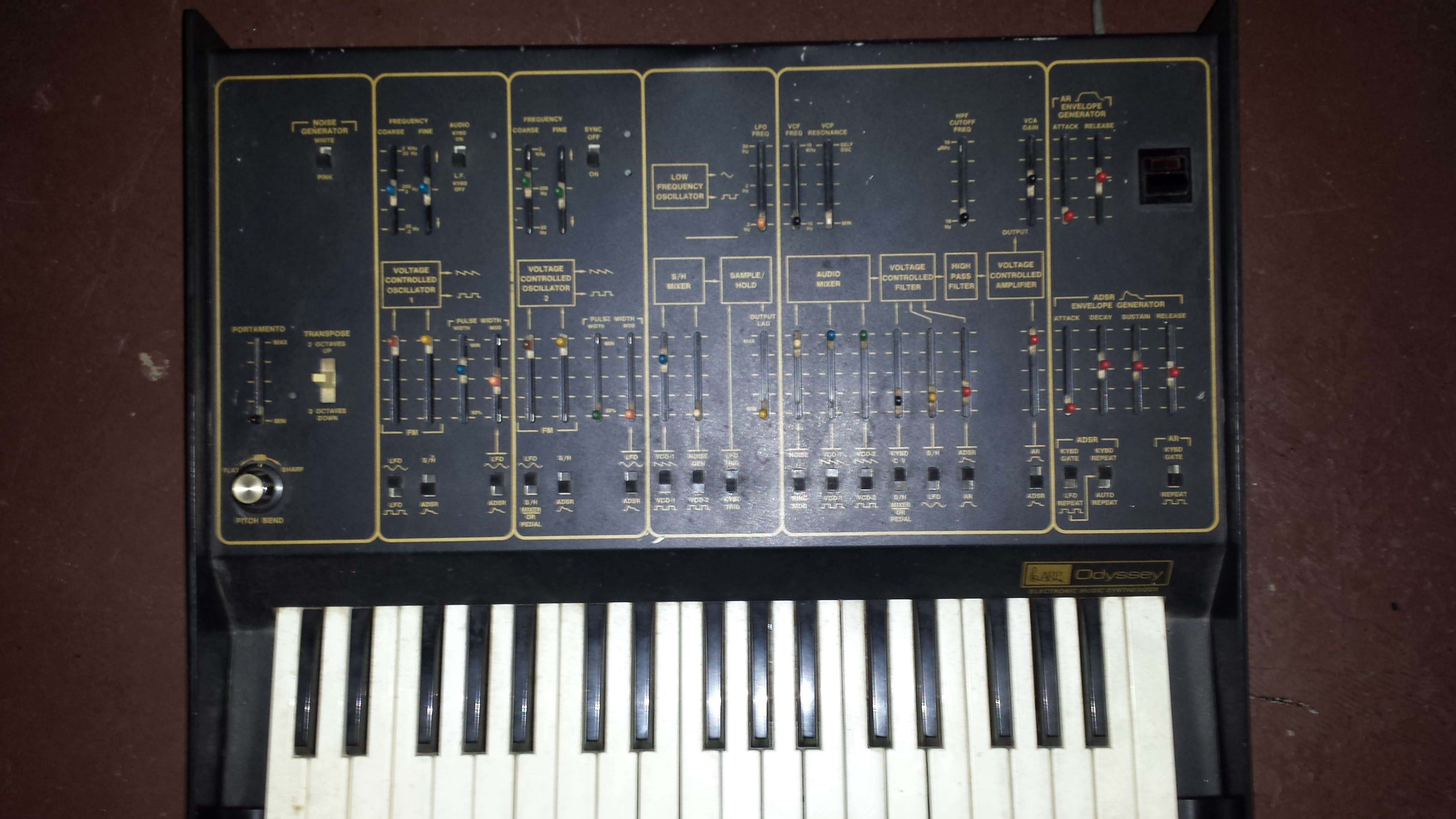
 20150215_172119 If you wanted an organ sound you carried around a Hammond or other organ.  If you wanted to use synthesizer sounds, you brought in a Moog or Arp and played two sounds at a time ……. and it felt glorious!