Posts Tagged ‘#microphone’

Recently I was asked in comments (The Observer) if a song I posted was recorded at home or in a studio.  I replied but thought I might expand on that a bit and also introduce another version of “The Pleasure Tax”.  As my brother and I got older we kept writing poems that were now almost always designed to be lyrics.  We got better.  Instead of playing the bongos, I played the toy organ I mentioned and everything else from there.  Here is where I get to also blame my parents again.  For Christmas we all got cool toys, but many of mine seemed to be music makers; recorders, tiny piano ‘tinkley’ toys, little ukuleles and eventually guitars with plastic strings and a drum set that was made for a three year old, but you get the point.  So we got better and we played instruments and my brother started playing guitar as well.  We had more toys to create music so when we wanted to record them (I was probably fourteen or fifteen by the time recording was a possibility) we wanted to add the various instruments and record them all together.

Through the years, we met other musicians and became great friend – or as I seem to recall – we met great friends that were also musicians.  Eventually there was a central core of serious song writers.  Sometimes there would be around eight or ten core writing members.  It would seem there was a competition going (and there always was!) to write the coolest or most clever or the most groovy song.  And we would have friends that would stop by and jam once in a while or would write lyrics and were willing to turn them over to a group of people that would fit them , with force if necessary, with a musical arrangement, melody line and harmonies.

The rambling link to all this is when we often played a collection of each other’s songs, we more than likely played with different performers supporting a few core members.   Those were exciting days!  One time you would sing the song and the lead vocalist was not there.  So you let an ‘orbiting member’ do the vocal melody and you sing the harmony part.  Most of us played instruments and sang – especially if we wrote the song as you can guess – so if the lead vocalist also played guitar, we filled in as a ‘core member’.   On one visit or jam session you performed and sang your song all by yourself to the group.  In other visits you were surrounded by full instrumentation and a choir of vocalists!  So here is an example of all that tied into a version of this song by a full band I toured with.  You heard us play live to an audience in Texas when we played the original song “Our Bodies Move” posted earlier.  We also played other original songs and snuck them into our sets.  One of them was “The Pleasure Tax”.  We called ourselves The Personal Touch.  Ric and I were a duo and when we decided to add a female vocalist as recommended by a booking agency they decided to sign us up for out of state gigs.  We got some studio time when signing up and we performed some original tunes and some cover stuff…. done The Personal Touch way.  “TPT” by TPT!

So this is rare original song of mine that was recorded in an actual studio.    We are a trio and there was a studio drummer.   Everything else is The Personal Touch with a very new vocalist.
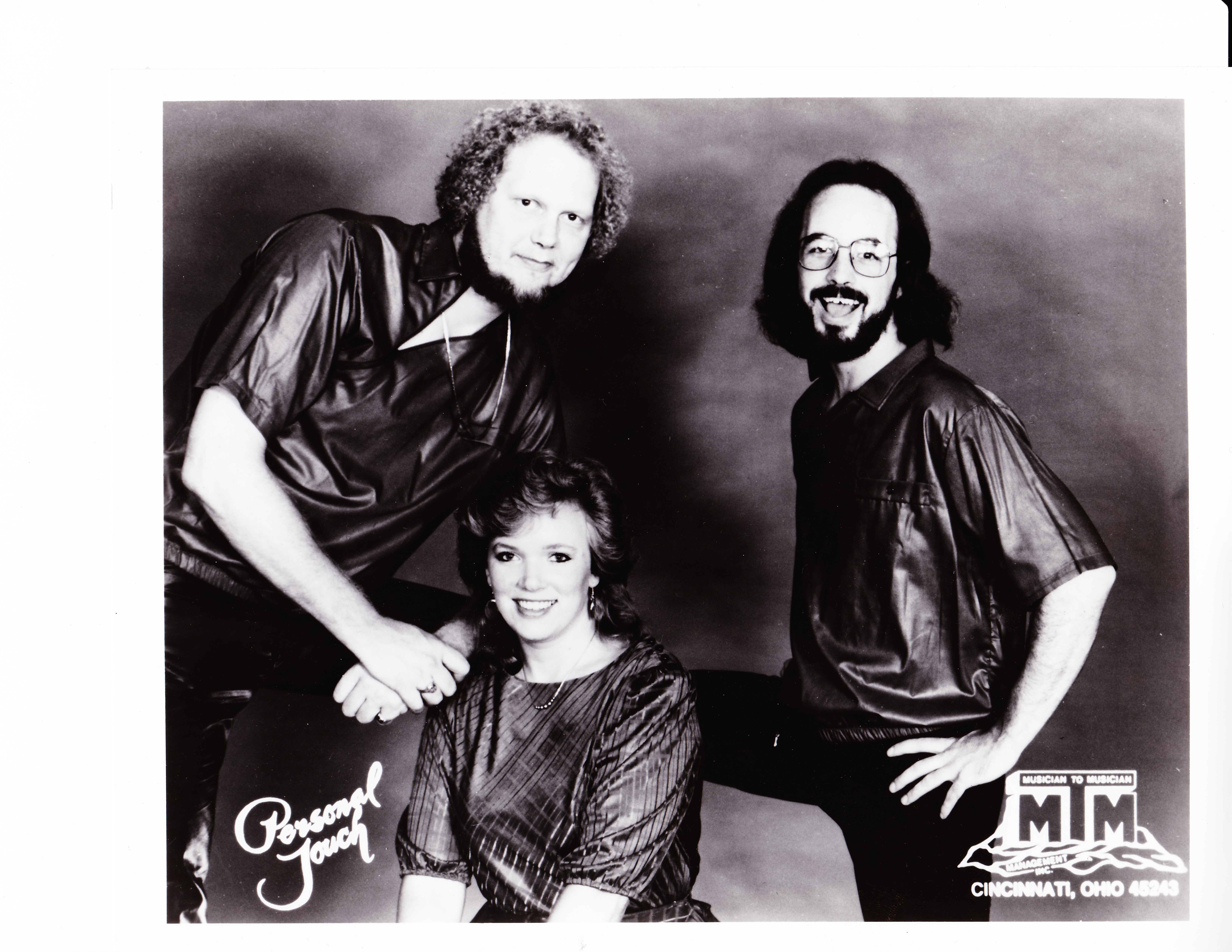
SCN_0001

We all try to rationalize situations we are not sure of.   We attempt to explain why things happen – or things that happen to us.  We try to understand the world around us.  When I worked at the instrument music store, I rationalized that I got the job because I was a previous customer and that I could program and understand the new digital MIDI keyboards hitting the market.  Very quickly (months, I believe) I was given my own satellite store to manage.  I opened three more chain stores in a few short years.  In reality, I probably bought more in equipment than I got paid to work there!  Almost kidding, but I understood a lot of the toys and had played with a bunch of them, but to get a room full of toys all day long and then get paid to learn all I could about them, well, I won’t get into religion here but that was heaven on Earth.  I would have done it for free.  And do you know how I rationalized being a SALES MAN? (I am pretty anti-establishment from way back………..) I tried to listen to where the customer was coming from and what they needed.  From there I would teach them what I knew about gear that would help get them to the next level.   Everyone needs to get to the next level.  That is what I am doing today.  It is what you are doing right now.

And sometimes we need to explain to ourselves why.   Why do I need to buy that new toy?  Why do they like me?  Why does the sun always shine where I am?  Why aren’t things working as I planned.  Why don’t they understand me?   What did I do right or wrong?  This has bugged me all my life and I hope it does not get to you.  Working in the music store(s) I sold gear to a lot of bands. Some people were regulars.  Always something needed, some new gear.  One of the bands told me that their sound man was on vacation and they needed someone to run sound for them.  It SEEEEEEMED logical to ask me, I knew about the mixing boards and PA systems.  But I had never run sound before ( truth in advertising alert – – – I did run sound for one other band prior to this but that is a funny story I wanted to share with you later.  So I did it once before  ….. technically  …….) What would you do?  These are good customers and by now good friends too.  If I run sound and really suck, the friendship and the work relationships are out the window.  I let them know I do not have a lot of experience but if they don’t have anyone else I would be glad to help.  They decide to go with me for the vacation gigs.  I run through the checklist a thousand times in my head.  I set the stage and house equipment up methodically, I run through the gain staging like riding a bike, I get the monitors working and run CD audio through the mains to test them.  Time to start.   Big crowd.   Lots of people and friends.  As you can imagine I am rapidly cycling through excitement, concern, confusion, fear, panic, and jazzed up one after the other.  The band starts playing and they are soooooo good I just relax.  I think even I can make these guys sound good!  I was lucky.  From what I remember the event was fine.

Their sound man decided to move onto other things and when he came back from vacation I was asked to take his place.  Again I had to rationalize;  well, they only like me cause I can get them a deal at the store. Well, they like me because I can set up the equipment pretty fast.   Well, it went over well because they are really tight and have great equipment.   You have probably done that a bunch of times as well.  It was hard for me to accept all the way down to the point of knowing that they noticed and appreciated the mix.  Their fans did too but most importantly, so did the band wives!  Never forget the power of the spouse!  So now for the first time, I am involved with a real band.  I am the regular sound guy.  The Band understands the power of the PA, and they determine that the sound guy gets equal cut…… as if he is as important to the overall sound as the individual band members were.  Amazing concept and it worked so well over the years.  I could not rationalize my way out of deserving that one; we worked as a team and the band always sounded great.

All this from knowing how to program a digital keyboard.

Again, there are lots of guidelines about setting EQ.  But don’t let this confuse you early on.  Basically, this is a fancy way to change the tone of the signal.  Knobs that are tied together in brackets work together. One determines the frequency range that will be affected and the other knob determines how much boost or cut will be applied to the selected frequency range.  The first instinct is to turn everything up.  Indeed this is quite natural but wrong.  Test after test, many people will say one sound is better than the other even though the only real difference is the higher or louder volume level.  If you think of boosting the frequency group with the EQ as if it were an amplifier turning the frequency group louder, this will help explain why we needed the extra head room when setting up the gain stage – you are making the signal louder when you add EQ boost.  If everything is set and you boost a channel EQ, you can unintentionally overload the input level on the EX send for example, causing that signal to distort or clip when returning back to the mix.

In this configuration there is a hi frequency group cut/boost knob.  Then there are hi-mid frequency knob tied to a cut/boost knob and below another pair in the Low-mid frequency range.  Underneath that is the low end group cut/boost knob.  In essence, select the amount of cut or boost on the frequency groups (Hi – Lo) to shape sound so it reflects the source signal.

For the paired knobs, select the frequency to be affected and using its pair cut or boost that particular frequency (as opposed to a larger group of frequencies for the Hi-LO knobs).  Keeping in mind sometimes less is really more, rather than try to turn frequencies up or louder to make them sound better, try making them sound bad.  Which frequencies interfere with the shape and tone of the instrument?  Does a certain frequency make a nasty squawking sound when it is a bit louder?  Try cutting that frequency a good amount.  You might be able to turn the channel volume up after cutting signals and keep the level not necessarily louder over-all in the mix but in the correct group or place in the instrument/vocal mix.  Listeners will be able to hear the instrument clearer and more distinctly if it closely resembles the real instrument’s group. So this gets pretty easy.  Like a simple home stereo, turn the top know to clockwise to make the sound brighter by increasing the hi frequency group.   Turn it counter-clockwise if it sounds harsh or brittle in the upper range.  The paired knobs allow you to select specific frequencies within a group (Hi or Mid) and then cut or boost to shape the tone of the source and add flavor or reduce gremlins.

For microphones that will be used by vocalists, this is an area where you can make a lot of difference because the vocalist signal is also being sent to the on-stage monitors.  Sometimes they are really loud.  And when that happens, the monitor is blaring the vocalist’s signal right back into the microphone on stage.  This in turn goes quickly to the monitor and straight at the microphone again.  Soon this will turn into a squeal in the range that is strongest or loudest.  This is the classic example of a ‘feed-back loop‘.

The knee-jerk reaction is to turn the channel volume down or turn the monitor sends down.  The better way is to learn which frequency/frequency group is triggering the loop first.  Use the paired EQ knobs to change the hi-mid or lo-mid frequency responsible for triggering the nasty loop.  Successfully done, slowly turn the volume up a bit.  Slowly increase volume (usually to the monitors, but will apply to the House Mains in some situations) until you start to hear a feed-back loop starting.  Determine which frequency it is and turn it down in the mix. You want as much clear gain as you can to the performers. If you can only turn Monitor Send up to 5, let’s say or you get feedback, the performer might not be able to hear themselves over the amplified instruments and will be forced to scream louder and louder to get heard.  If you pull down the offending frequencies you can turn the same signal to the Monitor Send to maybe 8 or so.  Happy vocalist.

In another acoustic song of mine, you can tell that I was clearly influenced by my surroundings.  In another career a long time ago in a galaxy….. never mind, but it was a long time ago I was working for a company that had a huge manufacturing plant in the middle of absolutely nowhere.  I am teasing a little, but there was nothing around for miles that stayed up later than the cows in the fields all around.  I was not used to that and I was going a little crazy in a bored sort of way, as I rented a place to stay until I got settled in the new job and town.

I have heard people talk about watching the grass grow but I had no idea they meant it literally.  So there are fields and corn.  More fields and soy.  Other fields with potatoes.  Cows and other live stock and then more corn.  I was interested to find out that some farmers hedge their bets a little and not plant everything right away.  Farmers in the next field over were planting late potatoes.  I couldn’t resist.  It sounded so ‘like me’.  I often feel like a late potato.  (Sagittarius – figured that one out already did you?)   Can’t keep up.  Everyone is ahead of you.  Get knocked down but you still help those in need.  Excited by the simple beauty of life all around.  You might feel like a Late Potato too.

https://itunes.apple.com/us/album/dark-energy/id962943592

“LATE POTATO” (c) 1980 MSK

Couldn’t keep up when the rest of the world was running,

Couldn’t sit down until the fireworks were over.

Now, I have no need.

For things that take great speed.

CHORUS: They call me Late Potato

Late Potato

Late Potato.

Tried not to scream when the Earth spent all it’s money,

Tried not to laugh while the ax was getting sharpened.

Now, I have no need.

For things that take great speed.

CHORUS: They call me Late Potato

Late Potato

Late Potato.

Takes no time to lose, when I think that I am losing,

Gave my last dime when I was begging on the street.

Now, I have no need.

For things that take great speed.

CHORUS: They call me Late Potato

Late Potato

Late Potato.

Now that we are back to audio channels, see the examples below.  Remember, that the channels run down from the TOP.  In some mixing boards, there is a ‘pad‘ switch – it could be above or below the 1st gain knob – that can determine which input type will be monitored by that channel and it can also change the input level or signal strength.  To reinforce the general definition below, if the audio source uses a battery or gets plugged into AC, it will need to be ‘padded‘ using this switch, where MOST microphone applications will not be strong enough if the channel is padded.

Whatever is plugged into the input jack on the mixer for that channel will send a signal to the 1st ‘gain stage‘.

This acts more like a flood gate than an amplifier in that it allows you to reduce the strength of the signal coming into that channel.  But it feels like an amplifier as when you turn it clock wise – it gets louder and if you turn it counter-clockwise – it gets softer or lower in volume……  This is the great balancer.  This knob determines how much of the signal gets distributed or sent to other out puts, effects, processors and recording devices, etc.  This is the foundation of the mix you are creating.   We start here and do not continue with the other knobs and gizmos in the ‘channel strip‘ until this is set correctly.

The biggest trick in setting this up for most band performances is – well – band members.  A lot of them do not trust the sound guys they have worked with for a lot of reasons.  Some performers will set their level (amp, energy, settings) really low during sound check, knowing once the sound is going they can turn themselves up so they can hear themselves.  Most often, it is just difficult to play really hard and loud like you will during a full band live performance when no one else is making noise.  Knowing all that, you need to start with a good level here so you can set the gain stage properly.  Generally, open microphones will need more gain than instruments like keyboards or mp3 players.  Things that get plugged into AC or use a battery will probably have a stronger signal strength than those that go directly to the snake/mixing board.

As a caution again, make sure the amplifiers are turned all the way down before you plug anything into the mixer once the full system is connected.  We tested the House PA and Stage monitors before the band got here, so before you start plugging in instruments and performers, turn the House PA amplifiers down.  I also turn the Monitor Sends down all the way so you do not hit the monitors with some pretty ugly sounds.  If you use fantom power for your microphones or other devices, I have heard people suggest you do the same whenever turning this function ON or OFF.

Now we are ready to move through the rest of the channel.  I am old school, and I like to start with the mixing board ‘clean’.  With all knobs and gizmos set to center or neutral.  Some guys like to start off where they left or pre-mix, but I have seen many situations where that theory gets yanked.

Above board design has the +48 fantom power switch.  When pressed in it will send appropriate voltage to the microphone or device.  Best to have Master faders turned down during this part as well.  Underneath is the pad/Line switch.  This you can safely determine a good guess in advance depending on what type of instrument is plugged into that channel.  You can always start with pad pressed in and gain stage at minimum to be on the cautious side and then release pad and turn gain knob as you watch the signal LED’s.  Get good performing signal as opposed to good practice level and see where the gain stage knob is pointing.  Try to get signal meters and LED’s close to the red or overload stage, and then back off the gain stage knob just a little.  We may need the extra head room when we add EQ, use ‘inserts‘ etc.

This board and many others offer a HPF (‘High Pass Filter‘).  When depressed it will allow mid and high frequencies to go through the channel and process normally.   So, it really cuts or turns down the really low end signals.  This is where the frequencies and ranges of instruments in an earlier LSR series come into play.  Instruments like, flutes, acoustic guitars, vocalists, cymbals, snares cannot make sounds in the low end.  The over-all mix will benefit if you use the HPF and cut the very low frequencies on those instruments.   Microphone stand rumble, bleed over from the kick drum into the snare along with a number of other unwanted sounds can be eliminated before they even get into the mix.

Next series we will continue down the signal path.