Posts Tagged ‘#song’

The sound board or audio mixer represents the hub in most audio mixing and mastering functions.  everything connects to the board.  Even the lighting system will use channels in the snake to connect from stage to console.  Things get plugged into and things get plugged out of the mixer as needed.  Today’s mixers are blue tooth USB WiFi fire-wired and light-piped together and will connect to an amazing array of devices.  So far we have focused on what gets plugged to the Inputs of the sound board.  There are a number of connection possibilities for the Outputs as well. We have already discussed some of them earlier, so this can be brief as you already know a lot of this in general.

On most sound boards you have a number of analog-out options.  In earlier discussions we talked about XLR and 1/4″ cables and connectors.  These will continue to be the main ones used for outputs.  On the front or face of most mixing boards you will see a stereo headphone out.  It will usually have its own volume knob and probably a selector to pick the options to Monitor including Stereo Out, Solo, Effects Sends, Effects Returns, Sub or Groups, Auxiliary Returns, and other options.  On the back or the top of the mixing board you will see the panel for Out-put connections in different sections.  There are some rules to determine what type of Audio Cable is used and whether it is a male end or female end and whether it has two connectors or three (or more).

In the early days of mixing boards, microphones and keyboards, it was important which brand you purchased.  If you wanted to get ‘that sound’ you had to have this mixing board channel strip or that particular keyboard.  Later on the computer industry similarly shot through their early days and you had the Macintosh or the Windows PC.  If you were brought up with one you could not be talked into the other.  Most modern equipment from PC’s to Automobiles can do everything.  They all have similar platforms and emulators.  There is style and quality as there always will be, but you can get software mixing programs and microphone/guitar emulator plugins that will make your audio tracks sound like anything you want —-THEY CAN EVEN MAKE YOU SOUND LIKE YOU ARE SINGING IN TUNE!!

So if you like Pepsi, no problem.  Want Coke?  Press this button……  More comfortable using a Mac?  Go for it.

All it takes is cash, a thorough understanding of what all the terms mean and a good idea where all the buttons are?!!?

Enjoy!
“QUIET NIGHTS” (c) 1976 MSK

INTRO: Quiet Nights, I sit without lights,

Then what I play, accompanies me.

Accompanies me.

I’m a man of refined habits,

But not refined too much.

I’m searching for the spirit

While I find the touch.

Locked inside no prison

But can not call your name.

Outside your rock tree garden

Where silent lovers came.

Mourning come and shed no tears

For those they should have saved

While rocks beneath the water

Become tombstones for the grave.

INTRO: Quiet Nights, I sit without lights,

Then what I play, accompanies me.

https://itunes.apple.com/us/album/dark-energy/id962943592

Much of my early years I had tons of energy.  Like most people my age, I got up early and stayed up through the evening.  Unlike most, I got a bit extreme with this and as I started working I seemed to be able to handle the after hour and evening shifts quite well.   Staying awake for 24 to 48 hours at a time was almost normal.  I obviously was not!  As most of the household was quiet and recharging their internal batteries, I would pull out my 12 string guitar.  In the very late and dark hours, I would reflect on the day(s) past and go over experiences I or friends had.  The fullness of the 12 strings (when I could afford to replace the old strings with new ones…) for me is just an amazingly soothing and inspiring environment.  The guitar noodling started to reflect a mood and the experiences would turn into words, phrases or thoughts that I would repeat and refine until they started to gel into lyrics.

I would use this method over and over.  Alone at night, lights out and everyone quiet or sleeping.  Even now, decades later, this is still my favorite time to reflect and create.  If you can, find your own time and environment that you can settle into quickly.  If you cannot find the time – MAKE it.  It does not have to be hours at a time.  Rarely do we write a masterpiece or complete a painting or poem in an hour or so.  The important thing is to set aside time – even little bits – and noodle, sketch, sing, or even think.  Build your stage for creativity and perform there as often as you can.  The masterpieces will create themselves…

Quiet Nights – An original tune I wrote based on this idea.

https://itunes.apple.com/us/album/dark-energy/id962943592

I have been very fortunate over the years in a number of ways.  As I look back on my history and the events I have been involved in, this rule became obvious to me.  I have always performed or created music with people that are much better than I am.  I did not do this by design, it just seemed to happen over and over.  One of my favorite bands I have been involved with for many years is Euphoria.  Think of all the adjectives you know to describe excellence and you can use them all for the members of the band.  They invited me to run sound for them and that is how I got the nerve to be a sound guy.  As they played out and I ran sound and helped with musical toys as a music store manager, we became great friends and shared a real passion for great music.  When the keyboard player decided to work on other projects, they found out I played keyboards and asked me if I wanted to take his place.  I cannot tell you how much courage it took to say yes.  I had never really played out before and we were into progressive rock and really complicated songs – many you heard clips from the studio demo posted earlier.

I knew I was not ready for prime time, but I got my keyboard gear together – practiced on my own every spare minute I had and forced myself to show up for practice.  I had big shoes to fill.  To their credit each of the band members were extremely patient!  The knew it would take me some time to get to their level.  Some songs on our set list were replaced with songs that had less emphasis on the keyboard until I could get my chops up to speed.  Some we had to drop altogether.  But they all worked with me and did not make me feel like I was slowing them down or not up to par.  Had it not been for their great attitude and flexibility, I may have thrown in the towel and called it quits before it got started.

The only better piece of advice in this area I think is just as important is to always play with great people!  Band life can be hard work, physically challenging and demanding and at the same time can be disastrous

Oceans of Oil” (@) MSK 1989

You go through life,

And I don’t complain.

Good things die

The rest stays the same.

Politics and money

Garbage is king.

The Liberty Bell

Doesn’t even ring.

Oceans of Oil, tinsel stars

Clouds are dark – the air is sick.

Swarms of people like killer bees

Mother Earth is on her knees.

You believe what you feel is right

And now you are going to make a fight.

You have no idea what we’re going through

If it’s your choice, nothing else will do.

Oceans of Oil, tinsel stars

Clouds are dark – the air is thick.

Swirling with pain and lost emotion

Mother Earth may soon need that abortion.

You believe that what you feel is right.

Clouds are dark.

https://itunes.apple.com/us/album/retrograde/id962542260

Recently I was asked in comments (The Observer) if a song I posted was recorded at home or in a studio.  I replied but thought I might expand on that a bit and also introduce another version of “The Pleasure Tax”.  As my brother and I got older we kept writing poems that were now almost always designed to be lyrics.  We got better.  Instead of playing the bongos, I played the toy organ I mentioned and everything else from there.  Here is where I get to also blame my parents again.  For Christmas we all got cool toys, but many of mine seemed to be music makers; recorders, tiny piano ‘tinkley’ toys, little ukuleles and eventually guitars with plastic strings and a drum set that was made for a three year old, but you get the point.  So we got better and we played instruments and my brother started playing guitar as well.  We had more toys to create music so when we wanted to record them (I was probably fourteen or fifteen by the time recording was a possibility) we wanted to add the various instruments and record them all together.

Through the years, we met other musicians and became great friend – or as I seem to recall – we met great friends that were also musicians.  Eventually there was a central core of serious song writers.  Sometimes there would be around eight or ten core writing members.  It would seem there was a competition going (and there always was!) to write the coolest or most clever or the most groovy song.  And we would have friends that would stop by and jam once in a while or would write lyrics and were willing to turn them over to a group of people that would fit them , with force if necessary, with a musical arrangement, melody line and harmonies.

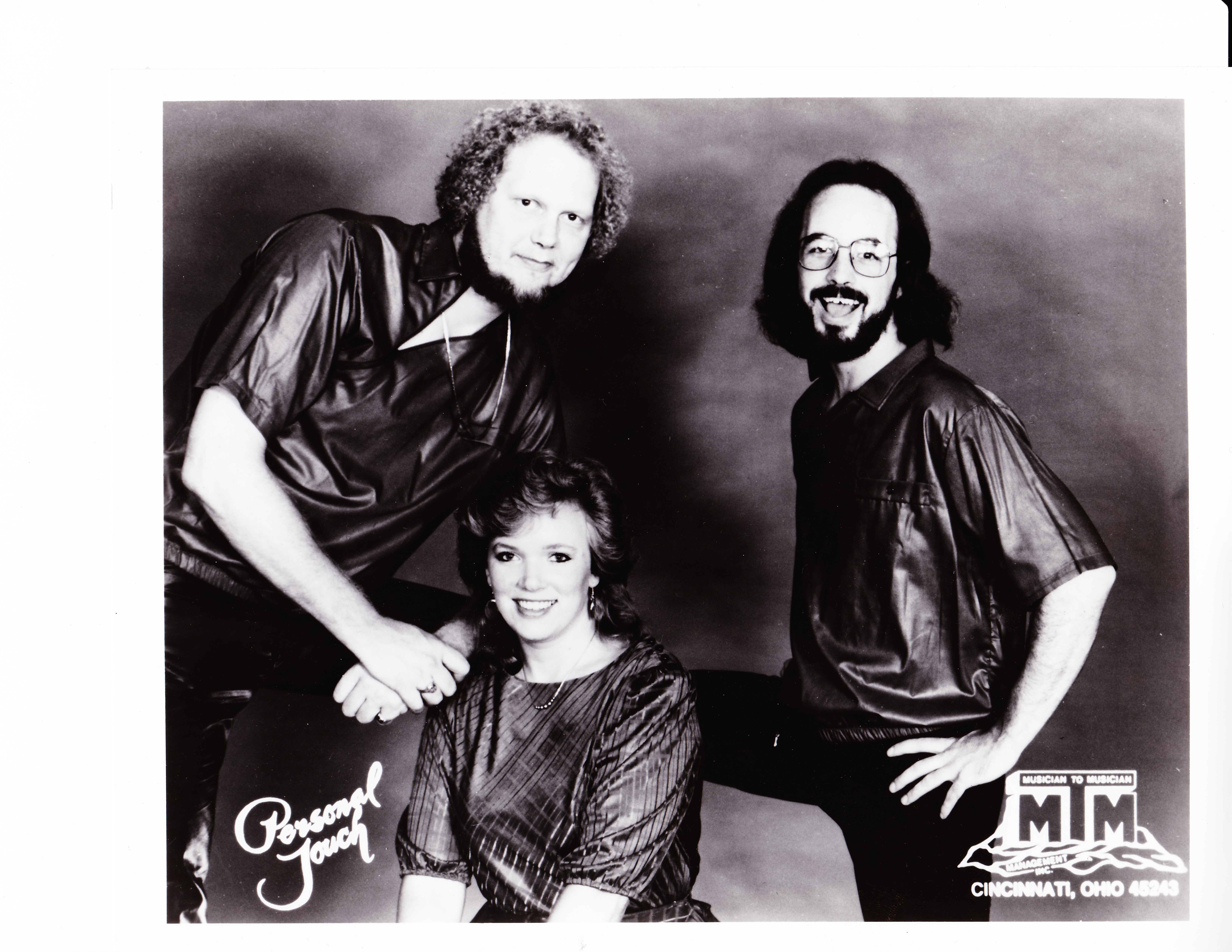
The rambling link to all this is when we often played a collection of each other’s songs, we more than likely played with different performers supporting a few core members.   Those were exciting days!  One time you would sing the song and the lead vocalist was not there.  So you let an ‘orbiting member’ do the vocal melody and you sing the harmony part.  Most of us played instruments and sang – especially if we wrote the song as you can guess – so if the lead vocalist also played guitar, we filled in as a ‘core member’.   On one visit or jam session you performed and sang your song all by yourself to the group.  In other visits you were surrounded by full instrumentation and a choir of vocalists!  So here is an example of all that tied into a version of this song by a full band I toured with.  You heard us play live to an audience in Texas when we played the original song “Our Bodies Move” posted earlier.  We also played other original songs and snuck them into our sets.  One of them was “The Pleasure Tax”.  We called ourselves The Personal Touch.  Ric and I were a duo and when we decided to add a female vocalist as recommended by a booking agency they decided to sign us up for out of state gigs.  We got some studio time when signing up and we performed some original tunes and some cover stuff…. done The Personal Touch way.  “TPT” by TPT!

So this is rare original song of mine that was recorded in an actual studio.    We are a trio and there was a studio drummer.   Everything else is The Personal Touch with a very new vocalist.

SCN_0001

Having written songs with my older brother from the beginning, I often bounce ideas at him to see what comes back.  I remember (and take all of this with a grain of salt as I am not the best at chronology or details!) going up to him and saying something like… “I have this idea for a song and not sure where it goes, but I keep thinking get out of here leave me alone take it away, and that they want to charge us for anything.  Soon they will sell us air and water”.  Below is the result.  I called it The Pleasure Tax, and it is more relative today.  And yes, they do sell us air and water now!

I am very picky about tuning and tones used.  Putting new strings on your guitar was sometimes a luxury.  When I finally did it is like turning on a light bulb in a dim room.  Yes, you could see before but now you can even read!  Music can be like that.  Things are not inspiring or do not sound very good and you change the strings (or reed, drum head, pads) and BAM!  You want to go out and play it hard!

The tax is still out there, so be careful when you want to relax.?

https://itunes.apple.com/us/album/dark-energy/id962943592

“THE PLEASURE TAX”  © 1981

Music by Michael S Kennedy          Lyrics by Michael S and Charles D Kennedy

Intro:

Take it away………… The Pleasure Tax  4x

Verse 1

Take it out, or take it home.

Take it back, it hasn’t grown

Take it away or leave it alone.

Say what you want, or hang up the phone.

Chorus

Put new strings on your damn guitar.

Make it simple, but play it hard.

He says he likes it I don’t know why.

We don’t understand but we’ll give it a try.

Verse 2

Hit the road or face the facts.

There’s something that your system lacks.

The very next time you go to relax,

You’ll go down from the Pleasure Tax

In another acoustic song of mine, you can tell that I was clearly influenced by my surroundings.  In another career a long time ago in a galaxy….. never mind, but it was a long time ago I was working for a company that had a huge manufacturing plant in the middle of absolutely nowhere.  I am teasing a little, but there was nothing around for miles that stayed up later than the cows in the fields all around.  I was not used to that and I was going a little crazy in a bored sort of way, as I rented a place to stay until I got settled in the new job and town.

I have heard people talk about watching the grass grow but I had no idea they meant it literally.  So there are fields and corn.  More fields and soy.  Other fields with potatoes.  Cows and other live stock and then more corn.  I was interested to find out that some farmers hedge their bets a little and not plant everything right away.  Farmers in the next field over were planting late potatoes.  I couldn’t resist.  It sounded so ‘like me’.  I often feel like a late potato.  (Sagittarius – figured that one out already did you?)   Can’t keep up.  Everyone is ahead of you.  Get knocked down but you still help those in need.  Excited by the simple beauty of life all around.  You might feel like a Late Potato too.

https://itunes.apple.com/us/album/dark-energy/id962943592

“LATE POTATO” (c) 1980 MSK

Couldn’t keep up when the rest of the world was running,

Couldn’t sit down until the fireworks were over.

Now, I have no need.

For things that take great speed.

CHORUS: They call me Late Potato

Late Potato

Late Potato.

Tried not to scream when the Earth spent all it’s money,

Tried not to laugh while the ax was getting sharpened.

Now, I have no need.

For things that take great speed.

CHORUS: They call me Late Potato

Late Potato

Late Potato.

Takes no time to lose, when I think that I am losing,

Gave my last dime when I was begging on the street.

Now, I have no need.

For things that take great speed.

CHORUS: They call me Late Potato

Late Potato

Late Potato.

Now that we are back to audio channels, see the examples below.  Remember, that the channels run down from the TOP.  In some mixing boards, there is a ‘pad‘ switch – it could be above or below the 1st gain knob – that can determine which input type will be monitored by that channel and it can also change the input level or signal strength.  To reinforce the general definition below, if the audio source uses a battery or gets plugged into AC, it will need to be ‘padded‘ using this switch, where MOST microphone applications will not be strong enough if the channel is padded.

Whatever is plugged into the input jack on the mixer for that channel will send a signal to the 1st ‘gain stage‘.

This acts more like a flood gate than an amplifier in that it allows you to reduce the strength of the signal coming into that channel.  But it feels like an amplifier as when you turn it clock wise – it gets louder and if you turn it counter-clockwise – it gets softer or lower in volume……  This is the great balancer.  This knob determines how much of the signal gets distributed or sent to other out puts, effects, processors and recording devices, etc.  This is the foundation of the mix you are creating.   We start here and do not continue with the other knobs and gizmos in the ‘channel strip‘ until this is set correctly.

The biggest trick in setting this up for most band performances is – well – band members.  A lot of them do not trust the sound guys they have worked with for a lot of reasons.  Some performers will set their level (amp, energy, settings) really low during sound check, knowing once the sound is going they can turn themselves up so they can hear themselves.  Most often, it is just difficult to play really hard and loud like you will during a full band live performance when no one else is making noise.  Knowing all that, you need to start with a good level here so you can set the gain stage properly.  Generally, open microphones will need more gain than instruments like keyboards or mp3 players.  Things that get plugged into AC or use a battery will probably have a stronger signal strength than those that go directly to the snake/mixing board.

As a caution again, make sure the amplifiers are turned all the way down before you plug anything into the mixer once the full system is connected.  We tested the House PA and Stage monitors before the band got here, so before you start plugging in instruments and performers, turn the House PA amplifiers down.  I also turn the Monitor Sends down all the way so you do not hit the monitors with some pretty ugly sounds.  If you use fantom power for your microphones or other devices, I have heard people suggest you do the same whenever turning this function ON or OFF.

Now we are ready to move through the rest of the channel.  I am old school, and I like to start with the mixing board ‘clean’.  With all knobs and gizmos set to center or neutral.  Some guys like to start off where they left or pre-mix, but I have seen many situations where that theory gets yanked.

Above board design has the +48 fantom power switch.  When pressed in it will send appropriate voltage to the microphone or device.  Best to have Master faders turned down during this part as well.  Underneath is the pad/Line switch.  This you can safely determine a good guess in advance depending on what type of instrument is plugged into that channel.  You can always start with pad pressed in and gain stage at minimum to be on the cautious side and then release pad and turn gain knob as you watch the signal LED’s.  Get good performing signal as opposed to good practice level and see where the gain stage knob is pointing.  Try to get signal meters and LED’s close to the red or overload stage, and then back off the gain stage knob just a little.  We may need the extra head room when we add EQ, use ‘inserts‘ etc.

This board and many others offer a HPF (‘High Pass Filter‘).  When depressed it will allow mid and high frequencies to go through the channel and process normally.   So, it really cuts or turns down the really low end signals.  This is where the frequencies and ranges of instruments in an earlier LSR series come into play.  Instruments like, flutes, acoustic guitars, vocalists, cymbals, snares cannot make sounds in the low end.  The over-all mix will benefit if you use the HPF and cut the very low frequencies on those instruments.   Microphone stand rumble, bleed over from the kick drum into the snare along with a number of other unwanted sounds can be eliminated before they even get into the mix.

Next series we will continue down the signal path.

Here is an instrumental I want to share with you.  Much of story telling is history, and much of my history might be considered ancient history to many of you.  We take a lot of things for granted.  It is hard to imagine times without smart phones, GPS navigation devices and e-mail.  Well, it helps to imagine those times but in the music industry.  When the first synthesizers came out you could create really cool new sounds but you could only play one or two notes at a time!!!  The major studios had upped the game and could now record up to 4 tracks of audio on the reel to reel tape machines.  Computers were so slow and had such limited memory that it was difficult if not impossible to record hi-quality tracks without it crashing or losing what you just recorded.

One of those new amazing synthesizers was from Moog.  Even now you will probably recognize songs that used these new machines.  Moog Swing is an instrumental I wrote in honor of the Moog sounds, although I did not own one.  I programmed one of my tone generators to get as close as I could to mimic the classic Moog sound.  This is all MIDI tracks recorded on the Atari 1040ST.  I would have to look at my track-sheet notes to confirm, but I think the drum sounds came from a Yamaha RX15 drum machine.  This is the same drum machine I used on the road in Corpus Christie Texas and you can hear it again in the song “Our Bodies Move” from my earlier post.  Today, modern samplers and PC program plug-ins attempt to offer the popular sounds from the ancient tone generators and keyboards in wave play-back programs, but it is nothing like the real thing.