Posts Tagged ‘#piano’

5244810_1436551652.1907_funddescription5244810_1436551640.5363_funddescription

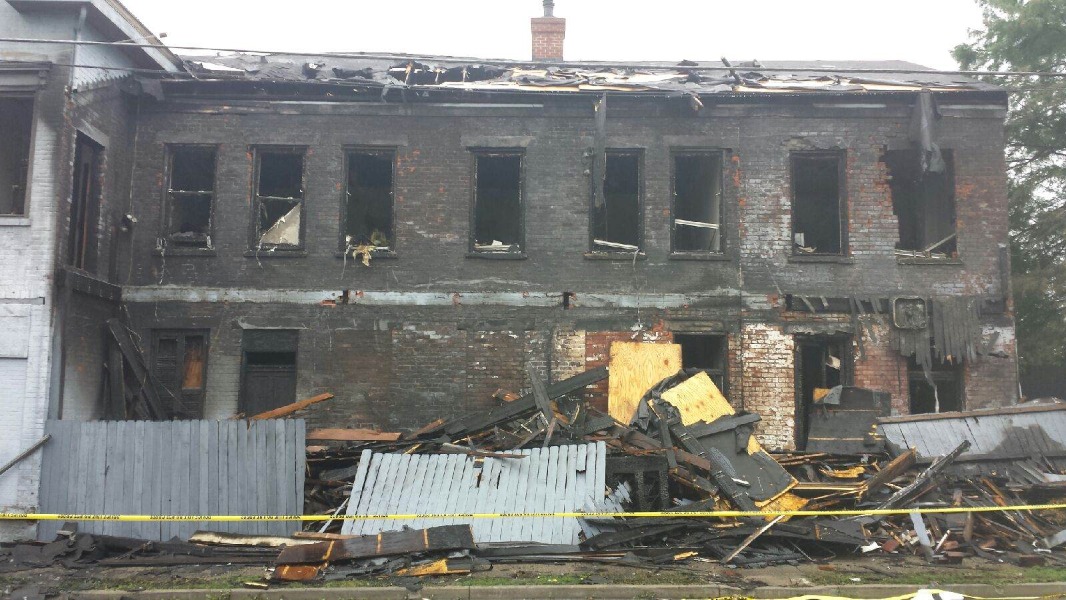
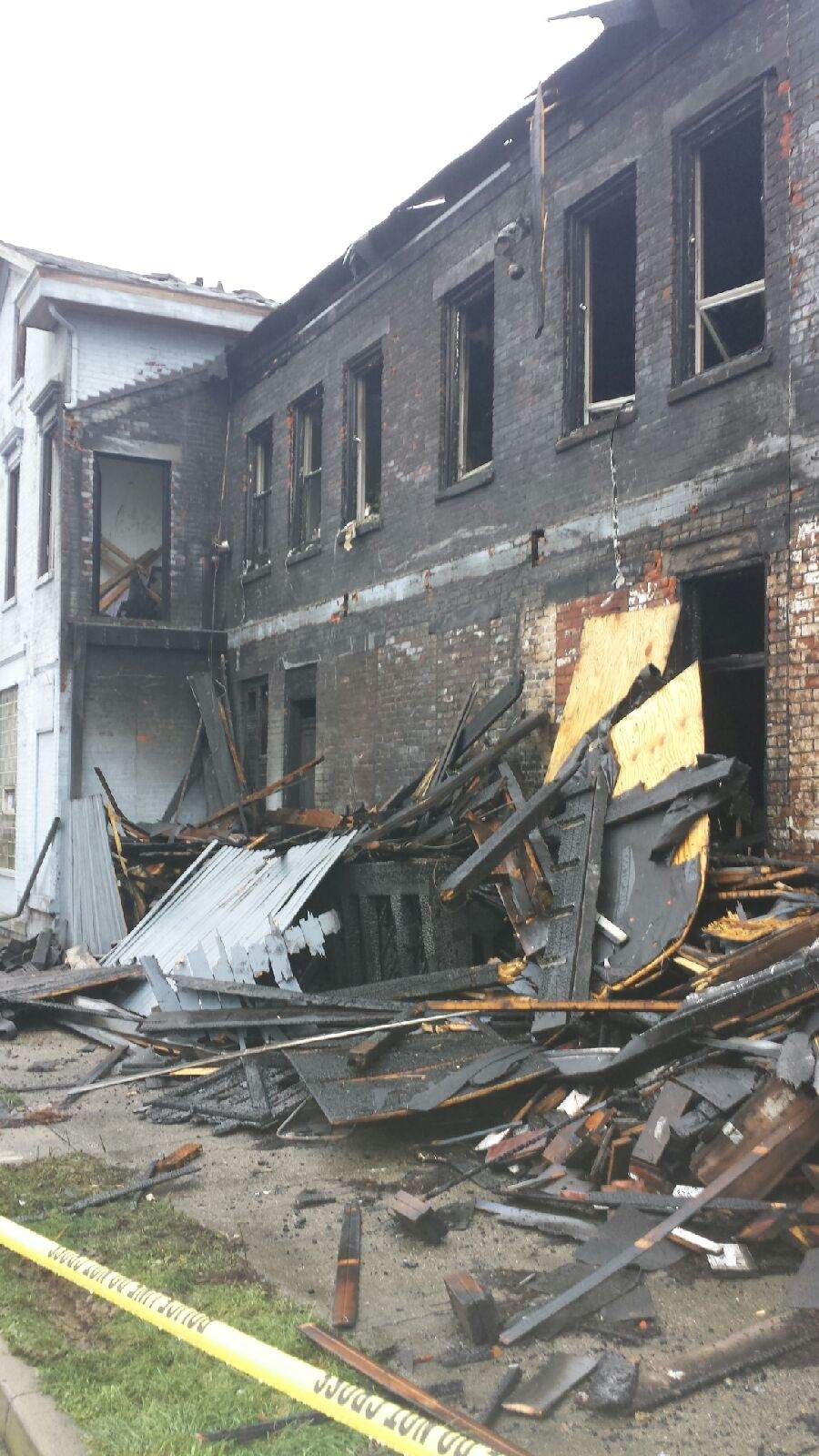
I have shared a number of experiences that have been about loss. Unfortunately, when you get older, you have more experiences watching the achievements of a life’s work and loves dissolve.  There are many types of loss and a personal friend of mine has been going through a very difficult time.  I just needed to share my experience and thoughts. Over these posts I have often mentioned working at local music stores and the benefit of knowing some awesome people. One of the friends I worked with for years and formed a great partnership “co-owning” the music store with all those years ago has had a devastating loss. As social media is …. he found out from friend’s texts and e-mails that while he was traveling, his house burnt down. His job is demanding and a lot of people depend on him to be there. He could not get home and as we all need to do from time to time; he had to rely on his friends and family (many times they are the same thing).  He is still away and has not seen his home other than on the news and through social media.

I would like to let you know that we have successfully completed the ‘search and rescue’ mission.  We got anything we could out of the building during the days of rain with holes in the roof.  It was a scramble with trusted friends.  We hauled ass and a bunch of other things.  Some musical instruments are damaged beyond use or repair and some have hope of restoration or managed to remain untouched by the whole thing!   He is a musician and like me has an insatiable love for art, music, friendship and making the world better than it would be without us in it.  This has got to be devastating.  For me, carrying out each old and precious instrument or piece of gear,  had a deep impact.  Others worked on his art and personal belongings.  I have heard their stories and all have a deep sense of loss.  No one was hurt.  Many things can be replaced.  But as the fire and then the water took their toll, a lot of his life’s work did dissolve.

We are working now on cleaning and saving as much as we can.   As my daughter Alisa, who runs my blog, practically grew up in the music store and all my friends, she has known John Van Eaton almost her entire life.  She is creating a positive use of social media and spreading the word through this and other avenues.  We will have a number of benefits to raise money and support to help him work through this until he is able to come home and the resources he will need once he returns.  I will post more info as details come in and thank you – fellow bloggers – for letting me share this with you.  The sharing allows healing.

 For more details or to contribute to his fund, see below.  MIDIMike

As a member of a cover band, I was given the opportunity to add something to my personal profile on the band web site.  I added a statement that went something like this; “we will play anywhere for free…..we just charge to move the equipment in and out”!

If you think about it, you would have to pay an awful lot of money to have ‘professionals’ move that much equipment.  Then they have to pack it all up and take it back at the end of the gig.  I have played keyboards, guitar, percussion and back up vocals in most of the bands I performed with.  Sometimes I also ran sound at the same time!  I was carrying so much gear for myself that I probably had more than the sound guy!  Once you haul equipment out of your house (I did not have duplicates, so what I used in the studio I had to tear down and take to the gig, set it up, tear it down, take it home and set it up in the studio again) and set up the gear you are all hot and sweaty and exhausted and now get to play for 4 plus hours, pack it all up and take it home.  Ahhhh, the glamourous rock and roll life.   Knowing all that, I think most people would be amazed at how little the local band playing the bar scene gets paid for all that work.   Maybe it is confusing because we call it ‘play’.  If I figured out an hourly rate I would probably get really depressed!

We also had to practice, individually and as a band.  No weekends free….  you get home at 3 or 4 in the morning and have to recover most of the day, then you play that night and do it all over again.  I always worked at a day job and still do, so this was about all the free time I had.  Now time for family, writing and recording projects and hopefully a little time in the sun.

Is it fun?  Absolutely.  I am an introvert and very shy in public, but it is a thrill to perform with great musicians and have the audience appreciate what you are doing.  I would not give it up, and if I were a bit younger I would still be out there.  At one point I told the band members that I would quit gigging out when I turned 50  – or my van broke down, whichever came first.  My van did break down first, but our light guy fixed it himself for free.  So I kept playing out.  Way past 50.  I recently stopped because tinnitus (a ringing in the ears from long exposure to loud sounds) got pretty bad in the last few years.  I only play out for special occasions these days, but it is still a blast.

Most of the connectors used for outputs will be 1/4″ male jacks.  These can be for ‘grounded’ (three-wire) or two-wire cables.  To make this part confusing, the cables can be made or changed with adapters to almost any connector type.  For long distances we prefer grounded or three conductor-wire cables as the third wire is used to take common signals from the other two wires, and ‘dump them to ground’.  Common signals would be interference and noise as the plus and negative wires are carrying the signal from the board.  The result is good signal with low noise introduced.  Guitar and keyboard cables typically go shorter distances and typically have a higher or stronger output signal than a microphone for example.  The cables in the snake will use three wire grounded shielded cables even if they are 1/4″ male connectors.

So we might expect to have an XLR connector for the Main Outs to the Main House power amps, but this is not a guarantee.  If 1/4″ jacks are provided it is recommended to use grounded three wire cables.

Most cables will provide a male connector on one end and a similar but female connector on the other end.  Male connectors are often used to connect to In-Puts and Female connectors are often used to connect to the Out-Put.  The male connector of the microphone cable connects to the mixing board In-Put and on the other end the female connector will connect to the microphone out.  Generally speaking there is little advantage plugging an in to an in or an out to another out.   I like to state the obvious LOL!

The mixing board will give us a Main Left and Right out, and probably a Mono Main Out.  These will be connected to the Main or House power amps.  During an event, the amps are usually turned all the way up and the House volume is ultimately controlled by the Main L-R faders on the mixing board.  This is why it is important to turn the Master Volume Faders on the mixing board all the way down whenever connecting or disconnecting equipment or making dramatic changes.

Depending on the board size and configuration you may also have a 1/4″ Direct-Out for many if not all input channels. (this is REALLY cool for recording and a lot of other creative uses…)   These can be really handy for independent channel recording, triggers, audio effects and alternate mixes to name a few.  Basically connect these to external recorder, processor or triggering gear as needed.  I will give some examples as the series expands to other main topics.  You will also have a number of Sends that are used for a variety of tasks and have different names, but with a few configuration details are for the most part the same thing.  Effect Sends, Monitor Sends, Auxiliary Sends, Sub Sends are splitters; they split the signal – keeping the one going to the House or recorder – and allowing you to send a lot or a little of that signal to the Send of your choice using the Send knob. As in the Monitor amps and House amps, the volume knob will ultimately be used to send the proper signal level to the external (and internal) devices or effects.  If you ‘send’ this to a digital delay, it may also have its own input and out put level knobs.

You may also have a two-track input and/or out put.  This is for playing stereo audio devices and for a straight stereo record out option.  Handy to listen to practice tapes, intermission music, PA system tests and other performance related media.

When I was listening to music in my early years, it seemed very natural for me to sing along with the songs I like or new tunes I heard.  I did not realize until years later that what I was doing was harmonizing with the melody, rather than duplicating it.  This was probably my first gateway into music creation.  I seemed to have a knack for developing harmonies.  Rhythms and timing also came to me without me understanding what I was doing.  Some people play sports, some are good at math, and some are builders.  I just seemed to feel comfortable with music.  My mother was in theater, radio and music and I have already blamed her for a lot of exposure to performing arts while I was growing up, so I will continue to do so!

The human voice is an amazing instrument.  There is nothing like it.  I know that I am not a powerful vocalist – I simply do not have the pipes it must take, but fortunately that did not stop my love for singing.  As I sang along more and more, I got better at finding the notes that would enhance or decorate the melody line.  I never tried to over power them, but to add to them.  Sometimes a song only needs a phrase or two highlighted by harmonies or echoing the melody.  Other tunes seemed to inspire harmonies throughout the song.  Eventually I would hear the melody in my head and sing along creating harmonies.  I could not begin to tell you how to create each note while singing… there are no manuals for this.  There are lessons to be learned and great teachers or vocal instructors, but the basics are not easily put into words.

When it comes to instruments, there is a certain amount of knowledge and practice involved in understanding where the right notes are and hitting them at the right time.  Just knowing the right ones to play are not enough as you have to know when and when not to play them.  I bring this up because a lot of musicians talk about jam sessions or getting together and without a lot of details, start playing new themes and using ideas from other musicians to create and have fun.  My point here is that I was never that comfortable simply bringing my instrument and jamming with others.  I do feel comfortable with harmonies and if asked to add percussion or drums, I could fit in.  But for me playing guitar, keys, bass, flute, sax, etc. without practicing and knowing what I was doing ahead of time is difficult.  Many of the musicians I worked with were absolutely great at this.  They were great at bouncing musical ideas off other players and coming up with gorgeous textures, themes and tonal landscapes.  I have a few early examples of jams and creative sessions I would like to offer here from time to time.

LOVE/HATE Challenge

I’ve been nominated to complete this challenge by several of you and after some convincing from my daughter, I’ve decided to give it a go. Instead of nominating 10 more bloggers, I would like to ask you all to post your favorite things in the comments so I can get to know you better.

I want to take this moment to thank all of you again for your very kind and encouraging comments. I have truly enjoyed reading your blogs and getting to know you better. Thank you for being a part of my journey.

Here it goes…

Love:

  1. Writing and recording music
  2. Biking
  3. Photography
  4. Nature – in all it’s glory and mystery
  5. Family and friends
  6. Reading great books, poetry, stories
  7. Creative music – artists and performers
  8. Teaching and helping others
  9. Science, education, discovery and truth
  10. Finding solutions to difficult problems.

Hate:

  • Wasting natural resources
  • Thinking that money makes you special
  • Personal and corporate greed
  • Things that should, but do not work
  • Violence
  • Thieves, scammers and swindlers
  • Demanding people
  • Bigots
  • Liars
  • Corporate and government politics

I don’t mind acknowledging that I am different than a lot of the people I know and hear about.

I am PERFECTLY OK with this.  I know my music and lyrics are not the typical main-stream songs blasted everywhere.  I will not appear on any searches.  Growing up and watching all the Westerns and TV shows, I never – not even once – wanted to be the cowboy or the soldier.  I identified with the ‘good guys’ as most kids do, but to me the cowboys and soldiers were not the only good guys.  I identified more with the American Indians living with nature rather than conquering.

I am not sure what exactly inspired this song when I started it.  I often think about music videos and how that could help explain through images some of the themes in this musical piece.  Possibly the new toys that could make sounds that added less traditional Western culture ideas and more ethnic and international instruments.  I also like contrapuntal rhythms and themes, so you will hear a lot in these pieces.

Once we simplify the 12 notes and we are now able to find any Major scale very quickly  (if you only did the exercise to find the other Major scales a few times you would see this is really easy….) and we can continue to explore the Major scales for other Keys.  This is the foundation of the musical theory pyramid.  It is important to understand how we get to the Safe Seven.  No, you do not have to memorize every note in every scale, although ultimately that will help a lot.  For now, try digging in and go over the Major scale for each of the 12 notes a few times.  As you play the new Major scales, sing (or hum!) the Do Re Me song along with the notes you are playing.  (tip for the day; as you hum each scale from the new starting note, you are changing keys!)

When we look back at the Safe Seven article, I showed a simple connection that I will repeat here:

C    D     E     F     G     A     B     C

1     2     3     4     5     6     7     1

There is a lot of math in music and music theory.  But instead of confusing things and making you change from your creative hat to your thinking hat, I find the math connection actually simplifies the confusion.  It allows me to see the connection the various notes have.  Personally, I HEAR and FEEL music more than I THINK it through.  I have friends that can convert and spit out scales, keys and modes as easily as some of us use Pandora, Spotify or I-Tunes to change a song.  I am really amazed at their skills, but that is something I am not all that good at.  But you will see how easy it is to understand the art and the science by following these posts.
If we look at the Safe Seven for each Major scale, we can make an easy conversion (or universal language) for describing note or chord progressions for ANY Major key.  I know, I keep on harping on the Major scales, but the others will be really easy once we have this understood and comfortable with the Mystery of the 12 and the Safe Seven, so let’s keep going.  For those of you new to this blog, I have no formal training and I am self taught.   I can assure you I am no genius.  If I can get this, so can you.  I just hope to make it a bit easier for you if you are just diving in or curious about how this fits together.

Knowing now that we call the first note the Root, and the same note higher or lower on the keyboard are called Octaves, we will begin a simple conversion;  Root = 1.  Each note in the Safe Seven can be represented this way by assigning it a value of 1-7.  We just assigned Root = 1, so moving up is easy.  In the example above, C is the Root so C = 1 and continuing the scale, D = 2, E = 3, F = 4, G = 5, A = 6, B = 7 and the octave is again the Root or 1.   Each Major scale can be represented the same way.  Use the Whole, Whole, Half, Whole, Whole, Whole, Half system to find the Safe Seven and then assign each to their corresponding number and we can stop talking about note names!  As we get more into chord structure and progressions, this will also come into perspective.  But let’s not get stretched too far.  Play with these exercises a few times a day and we will build our solid musical foundation quickly.  I will also go into the names of the notes as they change keys and this can be confusing to many until you see the method to the madness.

I want to give you an idea of perspective on some of the articles I have posted and will continue to post going forward.  This is the first video I have posted and while it is rather BORING, it is so informative at the same time.  I guess I have recorded original tunes since the very late 1960’s.  I recorded everything.  I deleted a lot!  But I recorded everything I could.  I experimented and adjusted and re-did and failed a few more times than I succeeded in the early days to be sure!  I also got into photography and then into video recording.  I practiced the mundane over and over until I got the exposure right, then with video until I could zoom and focus manually.  I joined the photography club in high school and learned to develop and enlarge my own pictures – something I thought was close to magic back in the day!

I shared earlier that I used (and still own!!!) what I think was the first personal computer to come out with built in MIDI ports – The Atari ST!  I used a software program back then to record the MIDI tracks and I could generate SMPTE time code and send a signal from the Atari to sync it up with recording machines (I had the Yamaha 4 track CASSETTE recorder during most of this).  When I talk about old technologies and how we used to record songs (or develop pictures…) It is hard for some to understand the challenges we had and the lo-fi quality of the final mix or product.

I want to use this video as an example of many things I refer to in this blog.  In this video, you will see what I saw when looking at the Atari computer monitor when I was playing or recording tracks.  Keep in mind this is all MIDI equipment available years ago.  The song I posted earlier will now be stripped of all guitars, vocals, effects and additional live sounds you heard on the full mix.  As you watch the video you will hear the sequences being played back live into the VCR input.  I took the monitor video out and connected to video in of the video recorder so this is a straight feed for both.  In the recording software, each “instrument” has a separate track.  Drums are all on one track with additional percussion sounds on different tracks, and as a reminder, each note (as triggered from my DX7 keyboard) represented a different drum/percussion sound coming from a drum machine.  You can hear the metronome from the Atari ticking away in the back ground as it is set to record.  As each track plays you can see the musical notes light up depending on the intensity of the track information.  You can also see the tempo of the song, the names of the tracks and the measures and beats as they click by.

The main piano sound is probably familiar to many of you even if you are quite young. It is the classic Piano Tine sound from the Yamaha DX7 synthesizers.  This video should also give you a sense of quality and resolution available at the time.  It might be difficult to hear the difference in song recording quality today, but we are all familiar with video resolution and HD cameras and large screen TV and computer standards available now.  Just think how this applied to the audio quality back then and then play some really old songs you grew up listening to.   It gives a better appreciation and perspective for some of the classic songs that seem to live forever.

The sound board or audio mixer represents the hub in most audio mixing and mastering functions.  everything connects to the board.  Even the lighting system will use channels in the snake to connect from stage to console.  Things get plugged into and things get plugged out of the mixer as needed.  Today’s mixers are blue tooth USB WiFi fire-wired and light-piped together and will connect to an amazing array of devices.  So far we have focused on what gets plugged to the Inputs of the sound board.  There are a number of connection possibilities for the Outputs as well. We have already discussed some of them earlier, so this can be brief as you already know a lot of this in general.

On most sound boards you have a number of analog-out options.  In earlier discussions we talked about XLR and 1/4″ cables and connectors.  These will continue to be the main ones used for outputs.  On the front or face of most mixing boards you will see a stereo headphone out.  It will usually have its own volume knob and probably a selector to pick the options to Monitor including Stereo Out, Solo, Effects Sends, Effects Returns, Sub or Groups, Auxiliary Returns, and other options.  On the back or the top of the mixing board you will see the panel for Out-put connections in different sections.  There are some rules to determine what type of Audio Cable is used and whether it is a male end or female end and whether it has two connectors or three (or more).

In the early days of mixing boards, microphones and keyboards, it was important which brand you purchased.  If you wanted to get ‘that sound’ you had to have this mixing board channel strip or that particular keyboard.  Later on the computer industry similarly shot through their early days and you had the Macintosh or the Windows PC.  If you were brought up with one you could not be talked into the other.  Most modern equipment from PC’s to Automobiles can do everything.  They all have similar platforms and emulators.  There is style and quality as there always will be, but you can get software mixing programs and microphone/guitar emulator plugins that will make your audio tracks sound like anything you want —-THEY CAN EVEN MAKE YOU SOUND LIKE YOU ARE SINGING IN TUNE!!

So if you like Pepsi, no problem.  Want Coke?  Press this button……  More comfortable using a Mac?  Go for it.

All it takes is cash, a thorough understanding of what all the terms mean and a good idea where all the buttons are?!!?

Enjoy!

I have been very fortunate over the years in a number of ways.  As I look back on my history and the events I have been involved in, this rule became obvious to me.  I have always performed or created music with people that are much better than I am.  I did not do this by design, it just seemed to happen over and over.  One of my favorite bands I have been involved with for many years is Euphoria.  Think of all the adjectives you know to describe excellence and you can use them all for the members of the band.  They invited me to run sound for them and that is how I got the nerve to be a sound guy.  As they played out and I ran sound and helped with musical toys as a music store manager, we became great friends and shared a real passion for great music.  When the keyboard player decided to work on other projects, they found out I played keyboards and asked me if I wanted to take his place.  I cannot tell you how much courage it took to say yes.  I had never really played out before and we were into progressive rock and really complicated songs – many you heard clips from the studio demo posted earlier.

I knew I was not ready for prime time, but I got my keyboard gear together – practiced on my own every spare minute I had and forced myself to show up for practice.  I had big shoes to fill.  To their credit each of the band members were extremely patient!  The knew it would take me some time to get to their level.  Some songs on our set list were replaced with songs that had less emphasis on the keyboard until I could get my chops up to speed.  Some we had to drop altogether.  But they all worked with me and did not make me feel like I was slowing them down or not up to par.  Had it not been for their great attitude and flexibility, I may have thrown in the towel and called it quits before it got started.

The only better piece of advice in this area I think is just as important is to always play with great people!  Band life can be hard work, physically challenging and demanding and at the same time can be disastrous